

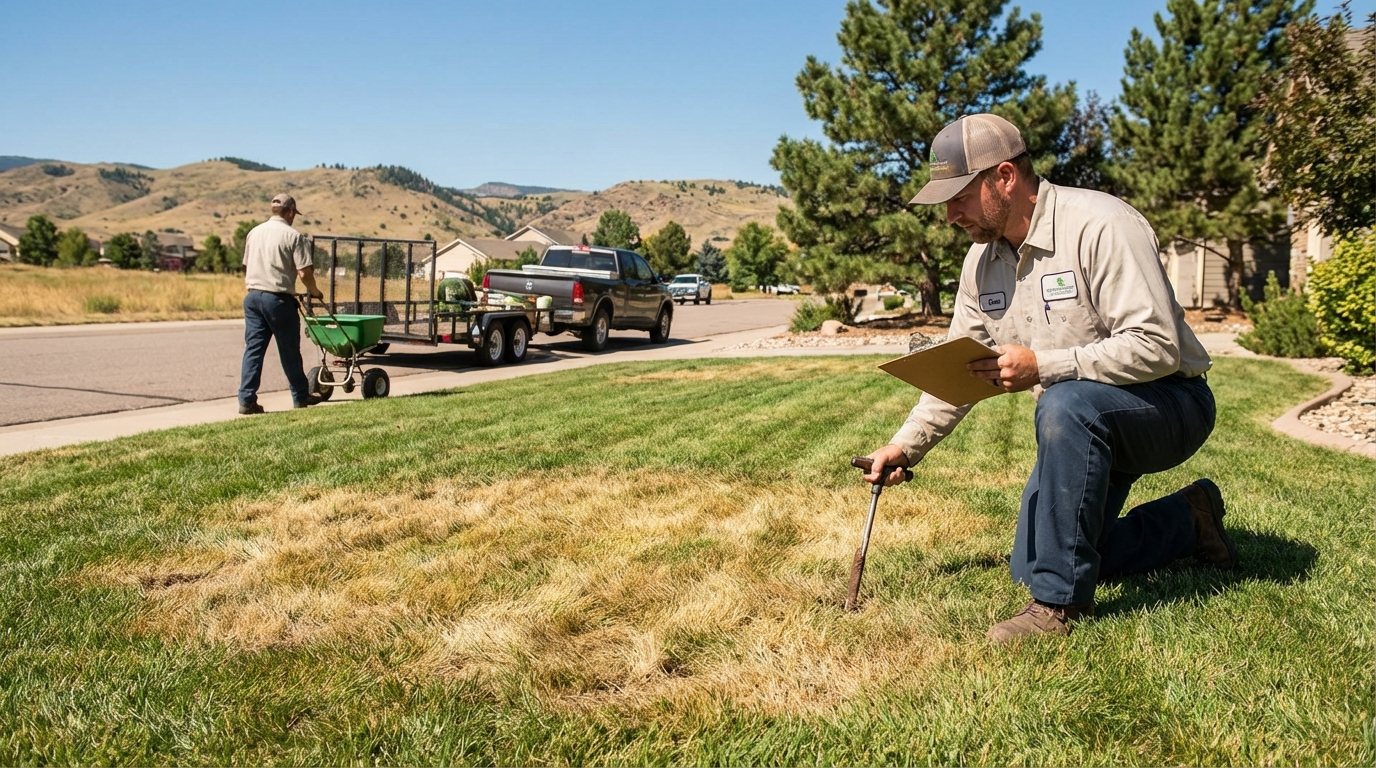
Brown spots are one of the most frustrating issues homeowners face when trying to maintain a healthy lawn. You water regularly, mow on schedule, and still—there they are. Those unsightly brown patches that seem to appear out of nowhere.
The good news? Most brown spots are fixable once you identify what's causing them. The key is understanding that brown patches aren't always caused by the same problem. What works for one lawn might not work for another, which is why it's important to look at the specific signs your grass is showing before you start treating it.
Over the years working with lawns across Boulder, Larimer, and Weld County, we've seen just about every type of brown spot issue you can imagine. Some are simple fixes. Others require a bit more attention. But almost all of them can be resolved with the right approach.
Let's walk through the most common causes of brown spots and what you can do about each one.
1. Underwatering
This is probably the most common cause of brown spots, especially during Colorado's hot, dry summers. Grass needs consistent moisture to stay green and healthy. When it doesn't get enough water, it goes dormant and turns brown as a survival mechanism.
Signs to look for: The brown areas feel dry and crunchy underfoot. The grass blades may look shriveled or folded. Brown spots often appear in areas that get the most sun exposure or are farthest from your sprinkler heads.
How to fix it: Increase your watering schedule gradually. Most lawns in our area need about one to one-and-a-half inches of water per week during the growing season. Water deeply but less frequently—this encourages roots to grow deeper into the soil. Early morning is the best time to water, as it reduces evaporation and gives grass time to dry before evening.
If you're not sure how much water your lawn is getting, place a few empty tuna cans around the yard while your sprinklers run. Measure the water collected after 30 minutes to see if you're hitting that target depth.
2. Overwatering
Yes, you can give your lawn too much water. Overwatering creates soggy conditions that suffocate grass roots and create an ideal environment for fungal diseases. It's a surprisingly common problem, especially with automatic irrigation systems that aren't adjusted seasonally.
Signs to look for: The brown patches feel spongy or soft when you walk on them. You might notice a musty smell or see mushrooms growing nearby. The grass may look yellow before turning brown, and the soil stays wet even a day or two after watering.
How to fix it: Cut back on watering frequency and let the soil dry out between sessions. Check your irrigation system to make sure it's not running too long or too often. If you have an automatic timer, adjust it based on rainfall and seasonal changes. In many cases, cutting back to two or three deep waterings per week is better than daily light watering.
Improving drainage in problem areas can also help. Sometimes a low spot in your yard collects water and needs to be leveled or amended with better soil.
3. Poor Soil Quality
Grass can't thrive in soil that lacks nutrients or has an imbalanced pH. Colorado soils tend to be alkaline and often lack organic matter, which makes it harder for grass to absorb the nutrients it needs.
Signs to look for: Brown spots appear even though you're watering correctly. The grass looks thin or patchy. New seed or sod struggles to establish. The soil may be hard, clay-heavy, or dusty.
How to fix it: Start with a soil test to understand what you're working with. You can pick up a test kit at most garden centers or send a sample to a lab for detailed results. Based on the results, you may need to add sulfur to lower pH, lime to raise it, or compost to improve overall soil structure.
Aerating your lawn and topdressing with quality compost can make a huge difference over time. This adds organic matter, improves drainage, and helps grass roots access nutrients more easily.
4. Pet Damage
If you have dogs, you've probably noticed those telltale circular brown spots with a ring of darker green grass around the edges. Dog urine is high in nitrogen, which essentially burns the grass in concentrated doses.
Signs to look for: Small, round brown patches, usually three to eight inches in diameter. The surrounding grass may be unusually green. Spots tend to appear in areas where your dog regularly goes.
How to fix it: The best prevention is to water the area immediately after your dog urinates, which dilutes the nitrogen before it can damage the grass. You can also train your dog to use a specific area of the yard that's mulched or graveled.
For existing damage, rake out the dead grass, water the spot thoroughly for a few days to flush out excess salts, then reseed or patch with sod. Some homeowners also add a bit of gypsum to the soil to help neutralize the urine's effects, though results vary.
5. Fungal Disease
Fungal diseases thrive in warm, humid conditions—especially when grass stays wet for extended periods. Brown patch, dollar spot, and rust are common fungal issues that can create irregular brown areas in your lawn.
Signs to look for: Brown spots with irregular shapes, sometimes with a darker border. You might see a white, gray, or reddish coating on grass blades, especially in the morning. Fungal spots often appear after periods of high humidity or frequent rain.
How to fix it: Improve air circulation by trimming back overgrown shrubs and trees near affected areas. Water in the early morning so grass has time to dry during the day. Avoid watering in the evening, as this keeps grass wet overnight—a perfect environment for fungus.
If the problem persists, you may need to apply a fungicide, but proper watering and mowing practices often solve the issue without chemicals. Make sure you're also bagging and removing clippings from infected areas to prevent spreading spores.
6. Compacted Soil
Over time, soil becomes compacted from foot traffic, heavy equipment, or just natural settling. Compacted soil prevents water, air, and nutrients from reaching grass roots, which leads to weak, brown patches.
Signs to look for: Brown spots in high-traffic areas like pathways or where kids and pets play. Water tends to run off rather than soak in. The soil feels rock-hard, and you have trouble pushing a screwdriver into it.
How to fix it: Aerate your lawn at least once a year—preferably in early spring or fall. Core aeration removes small plugs of soil, which allows air, water, and nutrients to penetrate deeper. You can rent an aerator or hire a professional to do it.
After aerating, topdress with compost and overseed any thin areas. This combination helps rebuild soil structure and encourages new grass growth.
7. Improper Mowing Height
Cutting your grass too short stresses the plants and makes them more vulnerable to heat, drought, and disease. Scalping the lawn removes too much of the grass blade, which reduces the plant's ability to photosynthesize and store energy.
Signs to look for: Brown patches appear shortly after mowing. The grass looks uneven or patchy. You can see bare soil or exposed roots in some areas.
How to fix it: Raise your mower deck. For most cool-season grasses common in Colorado, you want to keep the grass around three inches tall. Taller grass shades the soil, retains moisture better, and develops deeper roots.
Also, make sure your mower blades are sharp. Dull blades tear the grass rather than cutting it cleanly, which creates ragged edges that turn brown and invite disease.
8. Irrigation System Problems
Even if you think your sprinklers are working fine, small issues can create brown spots over time. Clogged nozzles, misaligned heads, broken lines, or uneven coverage all lead to dry patches.
Signs to look for: Brown spots in specific areas that don't seem to improve with more watering. Some zones stay green while others turn brown. You notice dry spots near sprinkler heads or in corners of the yard.
How to fix it: Walk your property while the sprinklers are running and watch for gaps in coverage. Check each head to make sure it's not clogged, broken, or spraying in the wrong direction. Clean or replace any damaged components.
If your system is older, consider upgrading to more efficient heads or adding drip irrigation in problem areas. A professional irrigation audit can also identify issues you might not notice on your own.
Common Mistakes Homeowners Make
Even with the best intentions, it's easy to make mistakes that actually make brown spots worse. Here are a few we see regularly:
Watering at the wrong time: Evening watering keeps grass wet overnight, which encourages fungal growth. Midday watering leads to excessive evaporation. Stick to early morning whenever possible.
Using too much fertilizer: More isn't always better. Over-fertilizing can burn your grass and create brown streaks. Always follow label instructions and consider using a slow-release formula that feeds your lawn gradually.
Ignoring thatch buildup: Thatch is a layer of dead grass and roots that accumulates between the soil and green grass. Too much thatch (more than half an inch) blocks water and nutrients from reaching the roots. Dethatching every couple of years helps prevent this.
Not adjusting for the season: Your lawn's needs change throughout the year. What works in June won't work in September. Adjust your watering, mowing, and fertilizing schedule based on temperature, rainfall, and grass growth rate.
Keeping Your Lawn Healthy Year-Round
Brown spots don't have to be a recurring problem. With proper care and attention to your lawn's specific needs, you can maintain healthy, green grass throughout the growing season.
The key is consistency. Regular watering, proper mowing, seasonal aeration, and soil care all work together to create a lawn that's resilient and less prone to damage. When problems do pop up—and they will—addressing them early makes a big difference.
If you've tried troubleshooting on your own and still can't figure out what's causing those brown patches, it might be time to bring in a professional. Sometimes an outside perspective and a bit of expertise can save you time, money, and frustration.
At AGT Landscape & Design, we work with homeowners throughout Boulder, Larimer, and Weld County to diagnose and solve lawn problems just like these. Whether you need help with irrigation, soil improvement, or a full lawn renovation, we're here to create outdoor spaces that thrive in Colorado's unique climate.
If you're ready to get your lawn back on track, reach out to our team. We'll take a look at what's going on and put together a plan that works for your property and your budget.


