

If you've ever looked at your yard on a Saturday morning and thought about all the weeding, mowing, trimming, and watering ahead of you—you're not alone. Most homeowners want a yard that looks great, but the reality is that traditional landscaping takes a lot of time and effort to maintain.
That's why low-maintenance landscaping has become so popular, especially here in Colorado. Between our unpredictable weather, water restrictions, and busy schedules, more people are looking for ways to enjoy their outdoor spaces without spending every weekend working in them.
The good news? You don't have to choose between a beautiful yard and your free time. With some smart planning and the right design choices, you can create a landscape that looks polished year-round with minimal effort. Here's what actually works.
Use Drought-Tolerant and Native Plants
One of the easiest ways to cut down on maintenance is to work with plants that are naturally suited to Colorado's climate. Drought-tolerant and native plants don't need constant watering, fertilizing, or babying to survive. Once they're established, they pretty much take care of themselves.
Think about plants like Blue Grama grass, Russian Sage, Penstemon, and Rabbitbrush. These species have adapted to our dry summers and cold winters, so they're already built to handle what Colorado throws at them. They also tend to attract pollinators, which is a nice bonus if you care about supporting local wildlife.
The key is choosing plants that match your yard's sun exposure and soil type. A plant that thrives in full sun won't do well in a shaded corner, no matter how low-maintenance it's supposed to be. When you plant the right species in the right spot, you eliminate a lot of the guesswork and ongoing care.
Another benefit? These plants typically don't need much pruning or deadheading. You might trim them back once a year in early spring, but that's usually it. Compare that to high-maintenance perennials that need regular attention, and the time savings add up quickly.
Install Drip Irrigation Instead of Sprinklers
If you're still hand-watering or relying on overhead sprinklers, you're making more work for yourself than necessary. Drip irrigation systems deliver water directly to the roots of your plants, which means less waste, healthier plants, and way less time spent dragging hoses around.
Drip systems are also more efficient. They use less water overall because there's no overspray or evaporation, which is especially important during Colorado's dry months. You can set them on timers, so your plants get watered consistently without you having to think about it.
Installation isn't as complicated as it sounds. Most drip systems are modular, so you can expand or adjust them as your landscape changes. And because the water goes straight to the soil, you're not encouraging weed growth the way overhead watering does.
For busy homeowners, this is one of those upgrades that pays for itself in time saved. Once it's in place, you're basically done. No more moving sprinklers, no more guessing if you've watered enough, and no more brown patches from uneven coverage.
Replace High-Maintenance Grass Areas
Grass lawns look nice, but they're also one of the most time-intensive parts of any yard. Mowing, edging, fertilizing, aerating, overseeding—it never really ends. If you're looking to cut back on maintenance, reducing the amount of turf in your yard is one of the best moves you can make.
That doesn't mean you have to rip out all your grass. But consider replacing areas that don't get much use—like narrow side yards or steep slopes—with groundcovers, mulch, or hardscape features. Groundcovers like Creeping Thyme or Sedum spread naturally and don't need mowing. They also add texture and color that plain grass doesn't.
In high-traffic areas where you do want grass, choose a variety that's suited to Colorado's climate. Turf-type Tall Fescue and Blue Grama are both solid options that require less water and fewer inputs than traditional Kentucky Bluegrass. They're more drought-tolerant and can handle our temperature swings without turning brown every summer.
Another option is to create defined lawn areas surrounded by mulched beds or gravel paths. This gives you the look of a traditional yard without the endless maintenance. You mow what matters and leave the rest to lower-maintenance materials.
Add Mulch to Garden Beds
Mulch is one of those simple solutions that makes a big difference. A good layer of mulch in your garden beds suppresses weeds, retains moisture, regulates soil temperature, and gives your yard a clean, finished look. It's also one of the easiest things you can do to reduce ongoing maintenance.
When weeds can't get sunlight, they don't grow. That means less time spent pulling them out every week. Mulch also keeps the soil cooler in summer and warmer in winter, which helps your plants stay healthier with less intervention from you.
There are a few types of mulch to choose from. Shredded bark and wood chips are common and break down over time, adding organic matter to the soil. Rock mulch—like river rock or decomposed granite—doesn't break down, so you won't need to refresh it as often. The downside is that rock can absorb heat, which isn't always ideal for plants in full sun.
Most landscape beds do well with a two-to-three-inch layer of mulch. You'll want to replenish organic mulch every year or two as it decomposes, but that's a small task compared to constant weeding and watering.
Use Hardscape Features Strategically
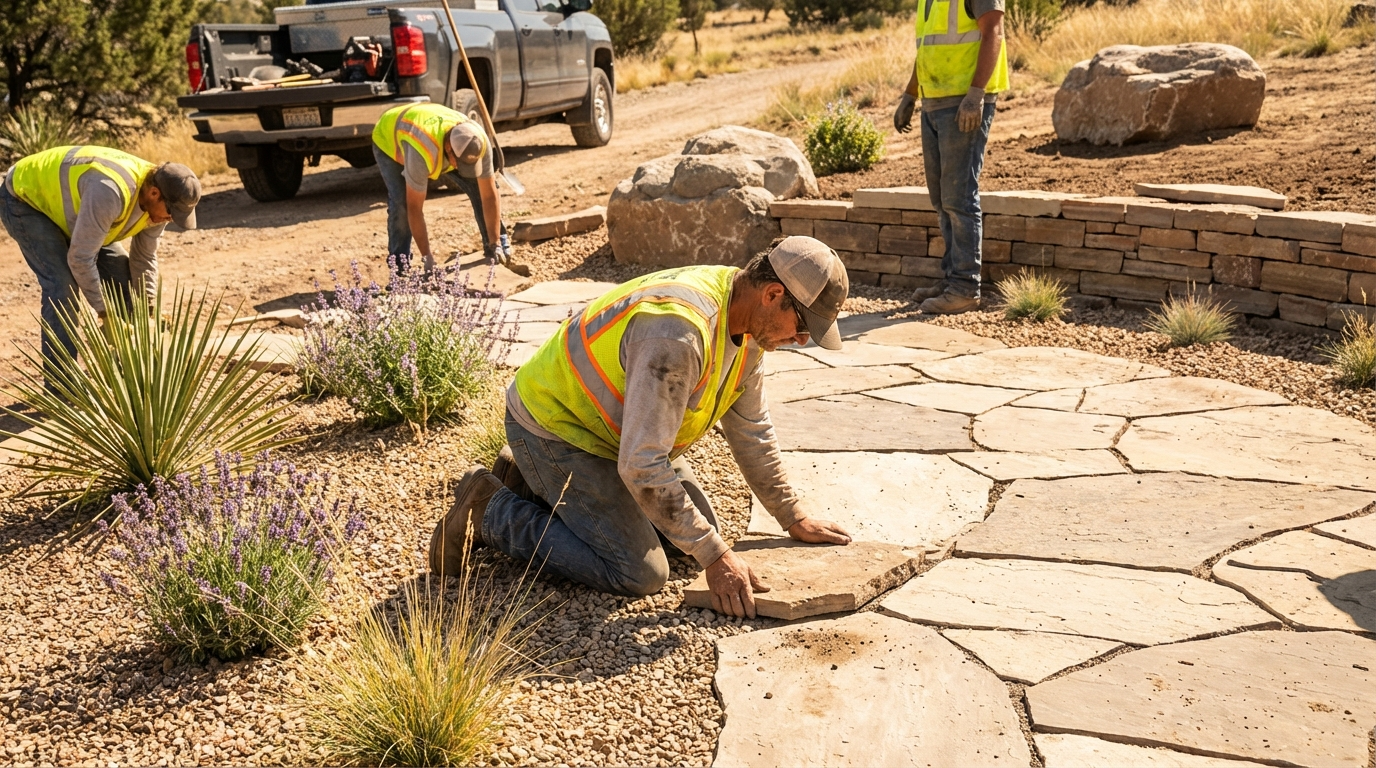
Hardscaping—things like patios, walkways, retaining walls, and gravel areas—doesn't need watering, mowing, or fertilizing. It's permanent, functional, and low-maintenance by nature. The more hardscape you incorporate into your design, the less plant care you'll have to deal with.
A well-placed patio or stone pathway can replace high-maintenance lawn areas and give you usable outdoor space at the same time. Retaining walls can turn a sloped, hard-to-mow area into terraced beds that are easier to manage. Gravel or decomposed granite paths can define garden areas without the upkeep of grass or pavers.
Hardscape also adds structure to your yard. It creates visual interest and helps organize different zones—like separating a seating area from a garden bed or defining the edge of a lawn. When done right, it makes your yard look intentional and well-designed, even if you're not out there working on it every weekend.
The key is balancing hardscape with softscape (plants). Too much hardscape can make a yard feel sterile, while too much softscape means more maintenance. A good mix gives you the best of both worlds—beauty and function without constant work.
Choose the Right Turf for Your Needs
If you're committed to having a lawn, the type of grass you choose makes a huge difference in how much time you'll spend maintaining it. Not all turf is created equal, especially in Colorado's climate.
Turf-type Tall Fescue is one of the best options for low-maintenance lawns here. It's drought-tolerant once established, doesn't need as much fertilizer as other grasses, and handles foot traffic well. It also stays green longer into the fall and greens up earlier in the spring.
Buffalo grass is another solid choice if you want a truly low-maintenance lawn. It's native to the Great Plains, so it's naturally adapted to our conditions. It requires very little water, doesn't need much mowing, and can go dormant in summer without dying. The tradeoff is that it doesn't handle heavy foot traffic as well as Tall Fescue.
If you're installing new sod or overseeding, talk to your landscaper about what makes sense for your yard's sun exposure, soil type, and how you plan to use the space. The right grass variety upfront saves you a lot of frustration down the road.
Plan Plant Placement Carefully
One of the biggest mistakes homeowners make is planting without thinking about long-term growth. A shrub that looks small in a one-gallon pot can grow into a six-foot-wide monster in a few years. If it's planted too close to a walkway or another plant, you'll be constantly trimming it back to keep it under control.
Proper spacing matters. When you give plants room to grow, they fill in naturally without crowding each other or encroaching on hardscape. That means less pruning, less competition for water and nutrients, and healthier plants overall.
It's also worth thinking about plant height and layering. Taller plants should go in the back of beds, shorter ones in front. This creates depth and makes your yard look more intentional, but it also ensures that every plant gets the light it needs without you having to constantly rearrange things.
Another tip: group plants with similar water and sun needs together. This makes irrigation easier and more efficient. You're not overwatering drought-tolerant plants or underwatering ones that need more moisture. Everything gets what it needs with less effort on your part.
Use Groundcovers Instead of Grass in Problem Areas
Every yard has those spots where grass just won't grow—too shady, too dry, too steep, or too compacted. Instead of fighting it, use groundcovers. They're low-growing, spread naturally, and require almost no maintenance once they're established.
For shady areas, try Ajuga or Sweet Woodruff. In sunny spots, Creeping Thyme or Sedum work well. These plants fill in gaps, prevent erosion, and add color and texture without any mowing or edging.
Groundcovers also work well as transitions between different areas of your yard. They can soften the edges of hardscape, fill in around stepping stones, or create a living mulch under trees and shrubs. Once they're established, they choke out weeds and take care of themselves.
Common Mistakes to Avoid
Even with the best intentions, it's easy to make mistakes when trying to create a low-maintenance yard. Here are a few to watch out for.
Overcrowding plants is a big one. It's tempting to fill in space quickly, but when plants are too close together, they compete for resources and require more pruning and thinning. Give them room to grow, even if it looks sparse at first.
Choosing the wrong materials is another common issue. Gravel looks great in photos, but if it's not installed correctly, it can migrate into lawn areas or become a weed magnet. Same with certain types of mulch—some break down too quickly or attract pests. Do your research before committing to a material.
Skipping irrigation planning is a mistake that costs time and money later. If you don't have a system in place, you'll end up hand-watering or dealing with dead plants. Even a basic drip system is better than nothing.
Finally, not maintaining what you do have. Low-maintenance doesn't mean no maintenance. You'll still need to do some seasonal cleanup, refresh mulch, and check your irrigation system. But if you've designed your yard well, these tasks should be quick and infrequent.
Final Thoughts
Creating a low-maintenance yard isn't about cutting corners or settling for something boring. It's about making smart choices upfront so you can enjoy your outdoor space without it becoming a second job.
The key is working with Colorado's climate instead of against it. Use plants that thrive here, install efficient irrigation, reduce high-maintenance grass areas, and incorporate hardscape where it makes sense. When you plan thoughtfully, you end up with a yard that looks great and doesn't demand constant attention.
If you're ready to transform your yard into a low-maintenance landscape that actually works for your lifestyle, we can help. At AGT Landscape & Design, we specialize in creating functional, sustainable outdoor spaces for homeowners across Boulder, Larimer, and Weld County. From drought-tolerant plant selection to smart irrigation systems, we'll design a yard that fits your needs and your schedule.
Get in touch with us today to schedule a consultation. Let's build a landscape you'll love—without the weekend workload.


