

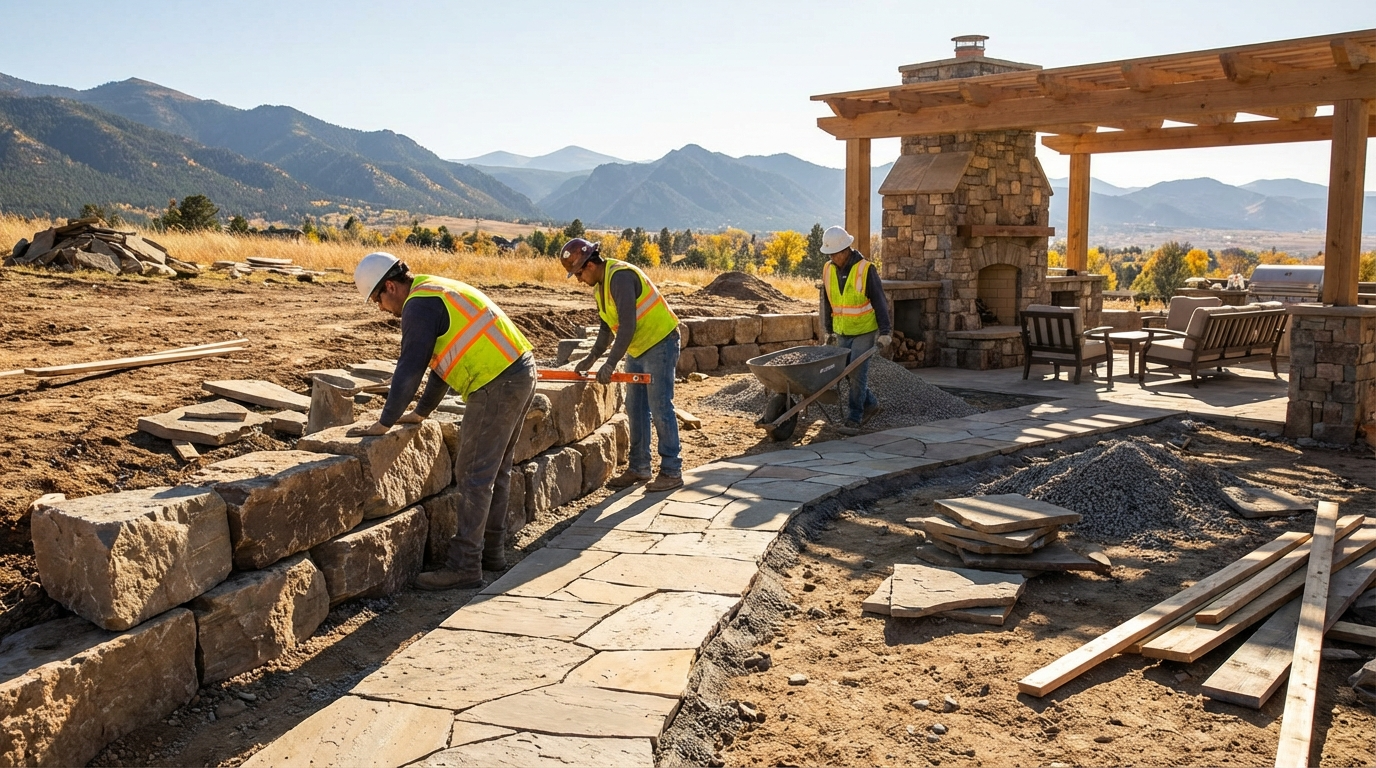
When most people think about landscaping, they picture plants, flowers, and green lawns. But there's another essential piece that makes everything work together: hardscaping. These are the solid structures in your yard—things like retaining walls, pathways, patios, and outdoor living spaces. At AGT Landscape & Design, we've seen firsthand how the right hardscape features transform yards across Boulder, Larimer, and Weld County. They don't just look good. They solve real problems and make outdoor spaces more functional for years to come.
Hardscaping works hand-in-hand with your plants and lawn. Think of it as the foundation that supports everything else. While softscaping (the living elements) brings color and texture, hardscaping provides structure, stability, and usability. Together, they create a balanced outdoor environment that's both beautiful and practical.
Let's walk through three core hardscape features every homeowner should understand: retaining walls, pathways, and outdoor rooms. Each one serves a specific purpose, and when planned correctly, they can completely change how you use and enjoy your property.
Retaining Walls: More Than Just Good Looks
A retaining wall is exactly what it sounds like—a structure designed to hold back soil and create level areas on sloped terrain. Here in Colorado, where many properties have natural elevation changes, retaining walls are often necessary, not just decorative.
If your yard slopes toward your home, water can flow directly to your foundation during heavy rains or spring snowmelt. A properly built retaining wall redirects that water away, protecting your home from potential water damage. It also prevents soil erosion, which can wash away topsoil and damage plant roots over time.
Beyond the practical benefits, retaining walls create usable space. A steep, unusable hillside can become a series of terraced garden beds or flat areas for seating and play. This is especially valuable in areas like Fort Collins and Boulder, where lots often come with challenging terrain.
The key is proper construction. Retaining walls need solid footings, proper drainage systems behind them, and materials suited to Colorado's freeze-thaw cycles. When done right, they last decades. When done poorly, they can fail within a few years, leading to costly repairs and potential property damage.
Pathways: Creating Flow and Access
Pathways do more than connect point A to point B. They guide movement through your landscape, protect your lawn from wear patterns, and add visual interest to your yard.
Without defined pathways, people naturally create their own routes—usually the shortest distance between two points. This leads to worn grass, muddy tracks during wet weather, and an overall messy appearance. A well-placed pathway solves this by providing a clear, attractive route that people actually want to use.
Pathways also improve accessibility. Whether it's getting to your garden beds, reaching the side gate, or accessing outdoor seating areas, a solid walking surface makes these trips easier and safer, especially during Colorado's unpredictable weather. No more navigating muddy grass or slippery slopes.
Material choice matters here. Flagstone, pavers, decomposed granite, and concrete each have different looks, costs, and maintenance requirements. For properties in Longmont or Lafayette, we often recommend materials that complement the home's architecture while standing up to our climate. Proper base preparation is just as important as the surface material—without it, pathways can sink, shift, or develop drainage problems.
Outdoor Rooms: Extending Your Living Space
An outdoor room is a defined area designed for specific activities—dining, lounging, cooking, or entertaining. It's not just a patio slab. It's a thoughtfully planned space that functions like an extension of your home.
The beauty of outdoor rooms is they increase how much you actually use your yard. Instead of a generic backyard, you have a dedicated spot for morning coffee, family dinners, or weekend gatherings. This makes your property more enjoyable and can significantly boost its value.
Creating an effective outdoor room involves several elements. You need a solid foundation—usually a patio or deck. You might add a pergola or covered structure for shade and definition. Seating walls, fire features, and built-in planters help define the space and add functionality. The goal is to create a comfortable area that feels intentional and inviting.
In areas like Erie and Berthoud, where new construction is common, we often work with homeowners to design outdoor rooms that complement their home's architecture and take advantage of views and natural light. The best outdoor rooms feel like natural extensions of the indoor living space, with thoughtful transitions and cohesive design.
Common Hardscaping Mistakes to Avoid
Even well-intentioned hardscape projects can go wrong without proper planning. Here are the issues we see most often.
Poor drainage is the number one problem. Hardscape features create impermeable surfaces that redirect water flow. If this isn't accounted for in the design, you end up with pooling water, erosion, or water flowing toward your foundation instead of away from it. Every hardscape project needs a drainage plan.
Choosing the wrong materials for Colorado's climate is another common mistake. Some pavers and stones don't hold up well to our freeze-thaw cycles. They crack, flake, or become uneven over time. Using quality materials designed for our weather conditions costs more upfront but saves money and headaches down the road.
Skipping proper base preparation is a shortcut that always catches up with you. Whether it's a retaining wall, pathway, or patio, the base determines long-term stability. Cutting corners here leads to settling, shifting, and eventual failure of the entire structure.
Finally, poor placement can make even a well-built feature less useful. A pathway that doesn't actually connect the places people want to go, or a patio positioned where it gets no shade during summer afternoons—these are design issues that reduce functionality and enjoyment.
Building Hardscapes That Last
Hardscaping isn't something you want to redo every few years. When planned and built correctly, these features should last for decades with minimal maintenance. That's why we always start with a detailed consultation and site evaluation. We need to understand your property's drainage patterns, soil conditions, sun exposure, and how you actually want to use your outdoor space.
At AGT Landscape & Design, we've worked on properties throughout Boulder County, Larimer County, and Weld County. We understand Colorado's unique challenges—the clay soils, the dramatic weather swings, the water conservation needs. Every hardscape project we take on is designed with these factors in mind.
Whether you're dealing with a sloped yard that needs retaining walls, looking to add functional pathways, or dreaming of an outdoor living space where you'll actually spend time, the key is thoughtful planning. Consider how each feature will function, how it connects to the rest of your landscape, and how it will hold up over time.
If you're thinking about adding hardscape features to your property, we'd be glad to talk through your options. We offer free consultations where we can walk your property, discuss your goals, and provide honest advice about what makes sense for your situation. You can learn more about our hardscaping and landscape construction services at agtlandscape.com, or give us a call at 720-586-0721. Let's build something that works for your property and stands the test of time.


